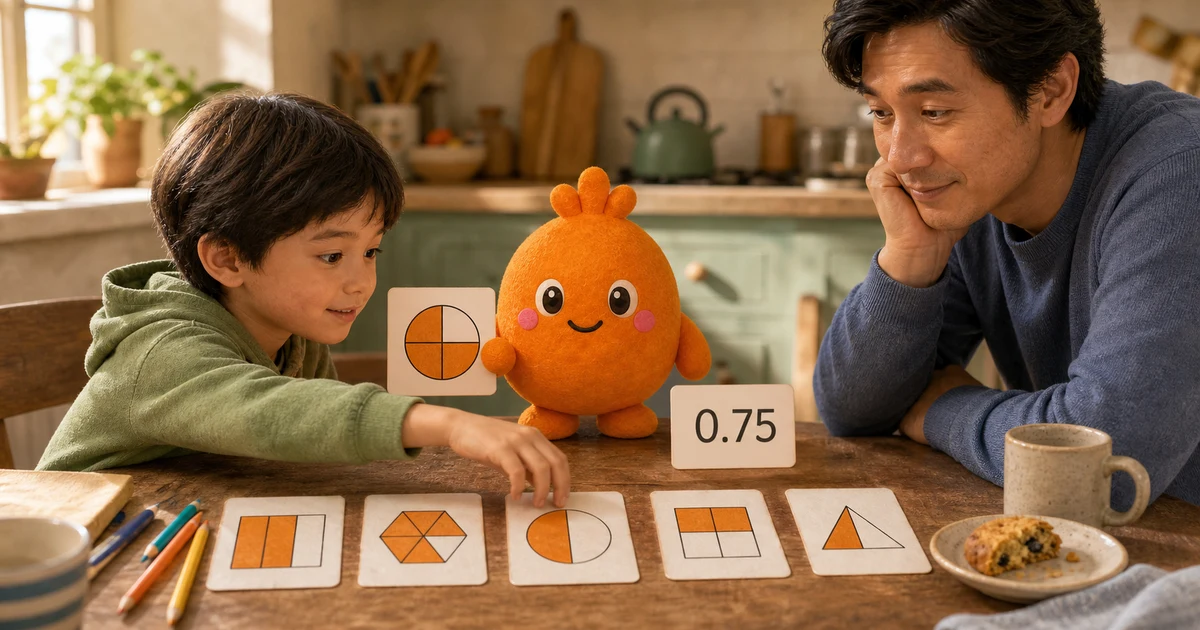
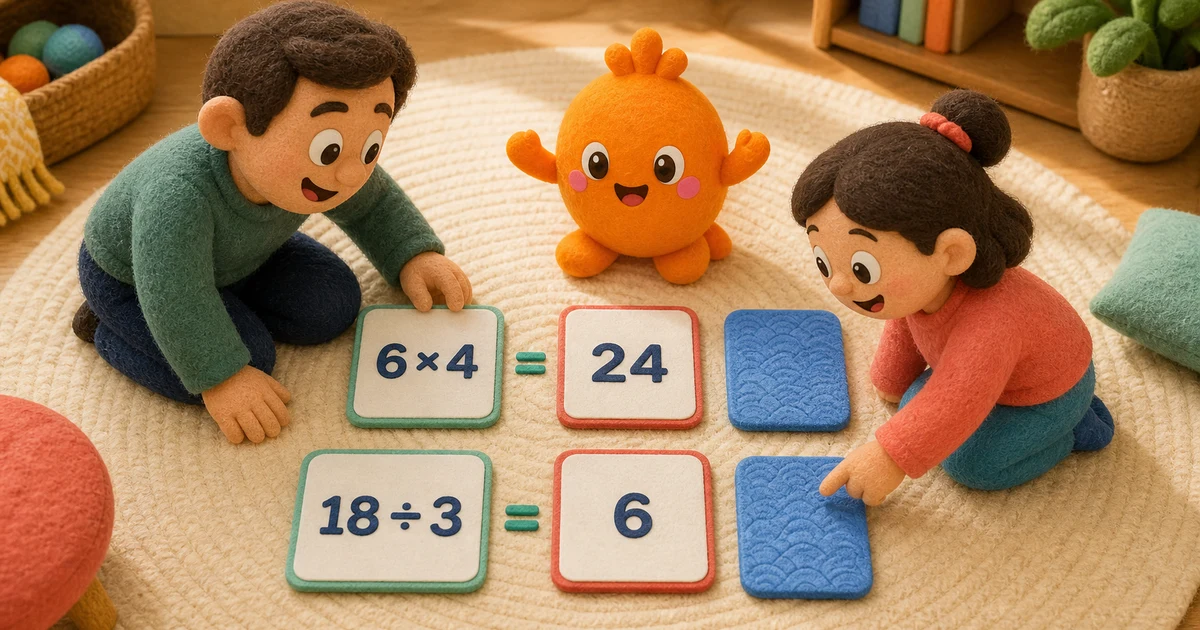
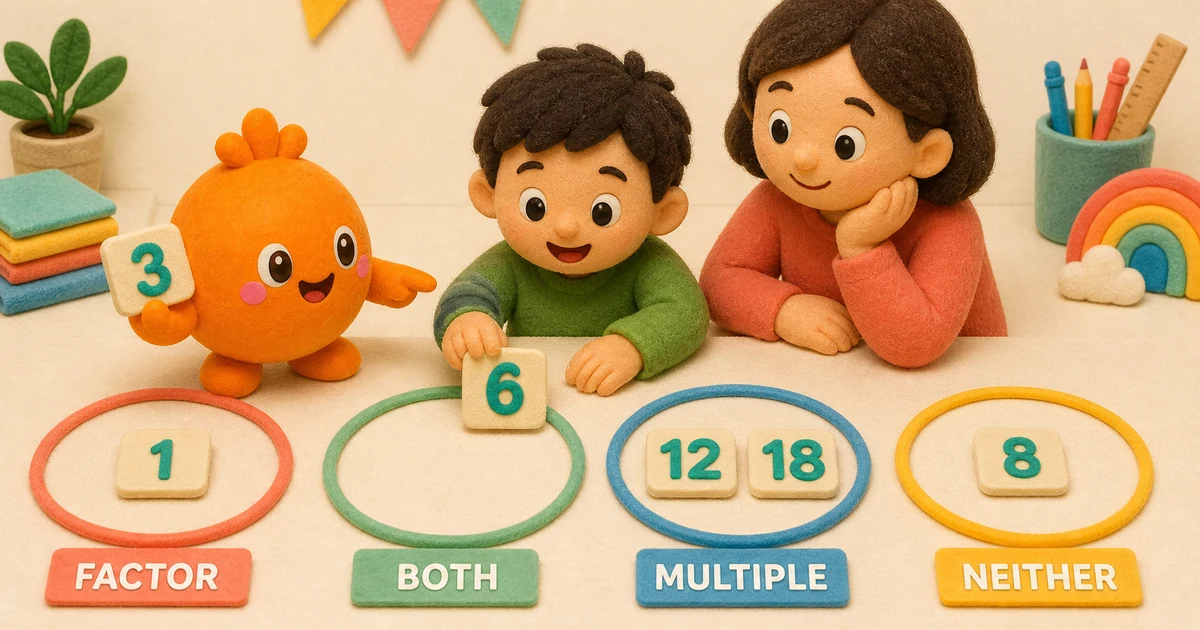
Parents often ask the question as if it has one answer: are math games better than worksheets?
The honest answer is no. Or yes. Or sometimes.
It depends on what you need the practice to do.
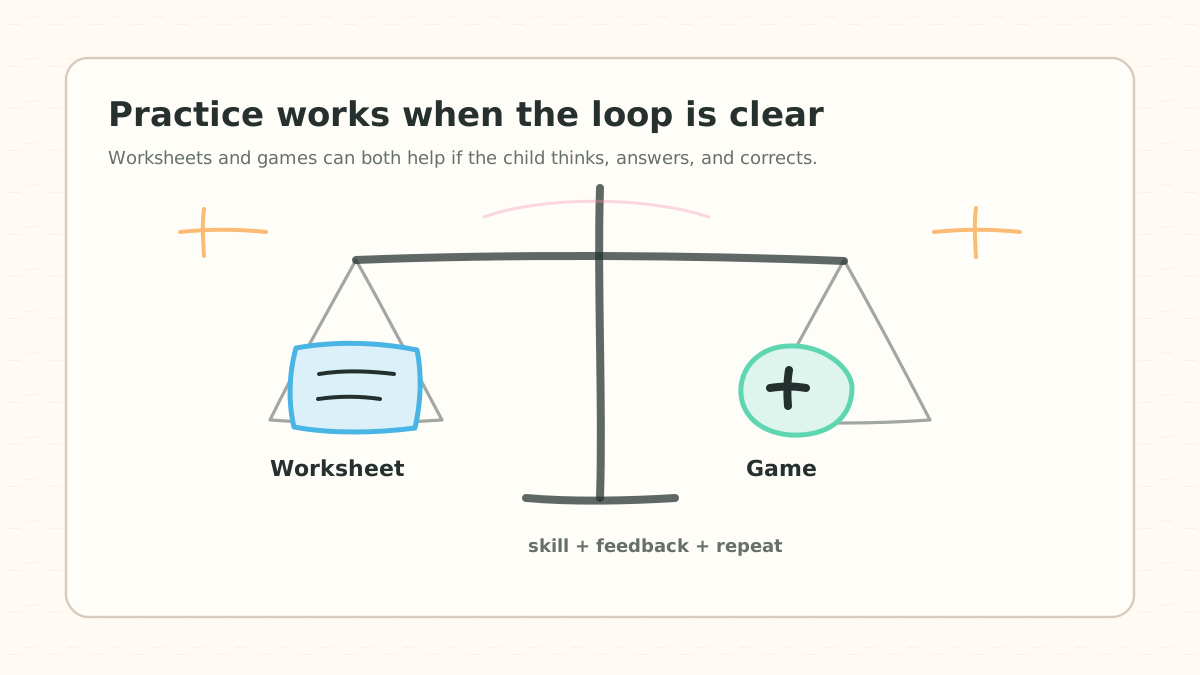
A worksheet can be useful when a child already understands the idea and needs a calm way to repeat it. A game can be useful when the child is avoiding the page before the first problem even starts. Both can be empty if they hide the thinking.
What worksheets do well
Worksheets are not the enemy. A good worksheet can give a child quiet repetition. It can show whether a skill is becoming fluent. It can help a parent or teacher see patterns in mistakes.
Worksheets work best when:
- the child already knows the basic idea
- the page is short enough to finish
- problems are grouped around one clear skill
- an adult checks mistakes soon
- the child is not already exhausted or upset
The danger is volume. A full page of similar problems can look productive while the child is simply repeating the same misunderstanding.
If a worksheet is useful, your child should be able to explain at least one answer afterward.
What games do well
Math games are strongest at helping children start.
A game can reduce the blank-page feeling. It can give immediate feedback. It can turn repetition into a loop instead of a chore. It can make a child say, “One more round,” which is sometimes exactly what practice needs.
NAEYC examples of math play include board games, counting games, number path games, matching games, and everyday activities that ask children to compare and count. The common thread is not the screen. The common thread is active thinking.
Games work best when:
- the math is visible
- the child has to make decisions
- feedback is quick
- the session has a clear end
- the game does not become mostly rewards
The danger is distraction. A game can feel educational while the child spends most of the time collecting, customizing, waiting, or tapping through animation.
The real test: what is the child thinking about?
Do not ask whether the tool is a worksheet or a game. Ask what the child has to think about.
If a worksheet asks, “Which group has more?” and the child compares quantities, that is math.
If a game asks the child to continue a pattern, choose a number, or react to a true/false equation, that is math.
If either one keeps the child busy without making them reason, it is not doing enough.
After any practice session, ask one question: “How did you know?” If your child can explain, point, count, compare, or show a strategy, the practice was probably useful.
Use games when resistance is the main problem
Some children do not hate math. They hate the feeling of sitting down to fail.
For that child, a short game can be a better first move than another worksheet. The game gives a smaller start, faster feedback, and less pressure.
That does not mean every game is good. It means the format can lower the entry barrier.
Try this order:
- One short math game.
- One question about the strategy.
- Three focused problems on paper.
- Stop.
That routine keeps the game from becoming a distraction and keeps the worksheet from becoming a battle.
Use worksheets when precision is the main problem
Other children like games but need slower practice. Maybe they rush. Maybe they guess. Maybe they understand during the game but cannot show the work when the problem is still.
For that child, a short worksheet can help.
Use fewer problems, not more. Pick the smallest set that lets you see whether the child understands. If they miss several, stop and talk. More of the same will not fix the misunderstanding.
What about screen time?
The American Academy of Pediatrics 5 Cs are useful here: child, content, calm, crowding out, and communication.
The question is not only “How many minutes?” It is also “What is this replacing?” A ten-minute math game that replaces a fight over practice may be helpful. A forty-minute game that replaces sleep, outdoor play, reading, or family conversation is a different trade-off.
Use the screen as a tool, not a default.
Where Math & Patterns fits
Math & Patterns is designed for the game side of the practice mix. It gives short missions, quick feedback, and pattern-first challenges that can warm up a child before deeper practice.
It is not a worksheet replacement for every skill. It is a way to make the first step lighter.
If your child resists math, start with one Math & Patterns game, then ask them what they noticed. If they can answer, you have something to build on.
A simple weekly routine
For one week, try this:
- Monday: one game, no worksheet
- Tuesday: five worksheet problems, no game
- Wednesday: one game plus one explanation
- Thursday: five worksheet problems plus one correction
- Friday: child chooses game or paper
At the end of the week, ask: which day gave the best thinking with the least friction?
That answer is more useful than any universal ranking. The best practice format is the one that helps your child think clearly and return tomorrow.