Choosing a math app is harder than searching for “best math app for kids.” That search gives you lists. It does not know your child.
One child needs confidence with counting. Another needs faster number facts. Another needs a reason to start. Another already likes math but wants harder puzzles. Those are different problems, so they need different tools.
The better question is not, “Which app has the most features?” It is, “Which app helps my child practice one real skill today without making the session bigger than it needs to be?”
Start with the skill, not the brand
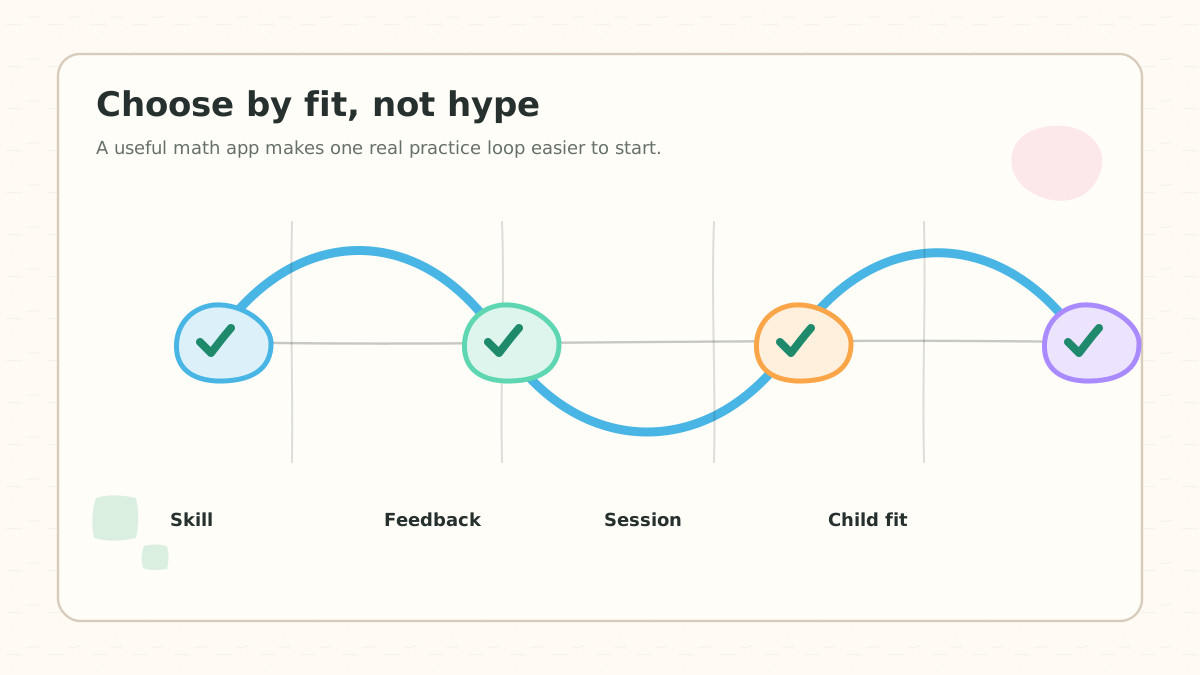
Early math is not one thing. It includes counting, quantity, one-to-one correspondence, comparing, sorting, patterns, shapes, measurement, and simple operations. IES guidance for young children treats early math as a broad set of ideas that children meet through direct instruction, conversation, and everyday problem solving.
That matters because a vague app promise like “make your child smarter at math” is not enough. A parent should be able to say what the session practiced.
Good examples sound specific:
- “This game asks my child to compare which group has more.”
- “This level works on number order.”
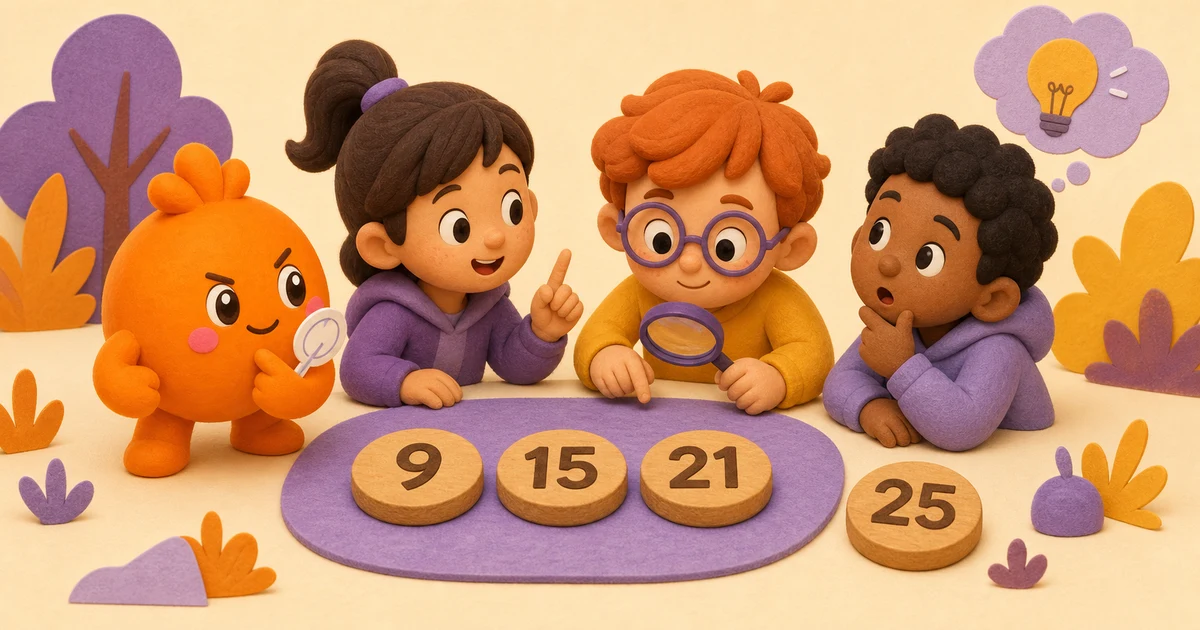
- “This puzzle asks my child to continue a repeating pattern.”
- “This round practices quick addition facts.”
If you cannot tell what skill the app is practicing, your child probably cannot either.
Look for feedback that happens fast
A useful math app should not let a child make the same mistake for ten minutes. It should show quickly whether an answer worked, then give the child another chance.
The feedback does not need to be loud. It does not need fireworks. It needs to be legible. A child should understand, “That did not work. I can try again.”
For younger children, feedback often works best when it is visual and immediate: a block moves, a number path advances, a pattern completes, or the missing piece snaps into place. For older children, a short explanation can help if it is not hiding behind too much animation.
The parent check is simple: watch one round. If the child makes a mistake, do they know what happened?
Keep sessions short on purpose
For many families, the winning routine is small: five to ten useful minutes. A short session is easier to start, easier to stop, and easier to repeat tomorrow.
Longer is not automatically better. A child can spend thirty minutes in an app and do very little math if the loop is mostly collecting, waiting, decorating, or navigating menus.
Short is not a compromise. Short is often the design.
Before you download anything, decide when the session ends. A clear stop protects the practice loop and makes it easier for the child to come back tomorrow.
Check the AAP media questions
The American Academy of Pediatrics now pushes families to think beyond a raw screen-time number. The 5 Cs are a useful parent filter: child, content, calm, crowding out, and communication.
For a math app, that becomes five practical questions:
- Does this fit my child’s age, mood, and needs today?
- Is the content really math practice?
- Am I using it to teach or just to calm a meltdown?
- What is it replacing: sleep, play, reading, movement, or conversation?
- Can I talk with my child about what they did?
If the app passes those questions, it is much more likely to be a healthy part of a routine.
Prefer apps that make parent talk easier
NAEYC’s family guidance emphasizes that everyday language is part of early math. Words like more, less, same, full, empty, bigger, smaller, before, after, and next help children build the concepts behind the symbols.
A good math app can give you material for that talk.
After one short session, ask:
- “What did you notice?”
- “How did you know what came next?”
- “Which one had more?”
- “What would happen if we tried a harder round?”
The app should give you something concrete to discuss. If all your child can say is, “I got coins,” the math may be too hidden.
Where Math & Patterns fits
Math & Patterns is built for short practice loops: quick games, pattern recognition, daily challenges, and missions that can be started without a long lesson.
That makes it useful when you want a child to do one real math thing now. It is not meant to replace a curriculum. It is meant to help practice feel easier to begin.
The planned physical toy rewards are a coming-soon feature, not something a parent should rely on today. The reason to try Math & Patterns now is the practice loop: choose a game, answer, get feedback, and try again.
The download checklist
Before keeping a math app on your child’s device, use this checklist:
- Can I name the skill it practices?
- Does the child get feedback quickly?
- Can one session finish in under ten minutes?
- Does it avoid hiding the math behind too many rewards?
- Can I talk with my child about what happened?
- Does it fit our family media plan?
If the answer is yes, keep it for a week and watch what happens. If your child starts more willingly, corrects mistakes, and can explain the challenge, the app is doing useful work.
If not, uninstall it without guilt. The point is not to own more learning apps. The point is to help your child practice math in a way they can actually sustain.