A pattern is a tiny rule you can see.
Red, blue, red, blue. Clap, stomp, clap, stomp. Big, small, big, small. Two, four, six, eight. A child may treat these as games, but the habit underneath is serious math: notice what is the same, notice what changes, and predict the next step.
That is why pattern recognition belongs near the center of early math. It is not decoration. It is one of the first ways children practice structure.
Patterns teach children to compare
A child cannot continue a pattern until they compare its parts.
In red-blue-red-blue, color matters. In circle-square-circle-square, shape matters. In clap-stomp-clap-stomp, sound and movement matter. In 2-4-6-8, the change between numbers matters.
That comparison habit shows up everywhere later. Which number is larger? Which shape has more sides? Which two groups are equal? Which operation changed the value?
The pattern game is a low-pressure way to practice seeing relationships.
Patterns teach prediction
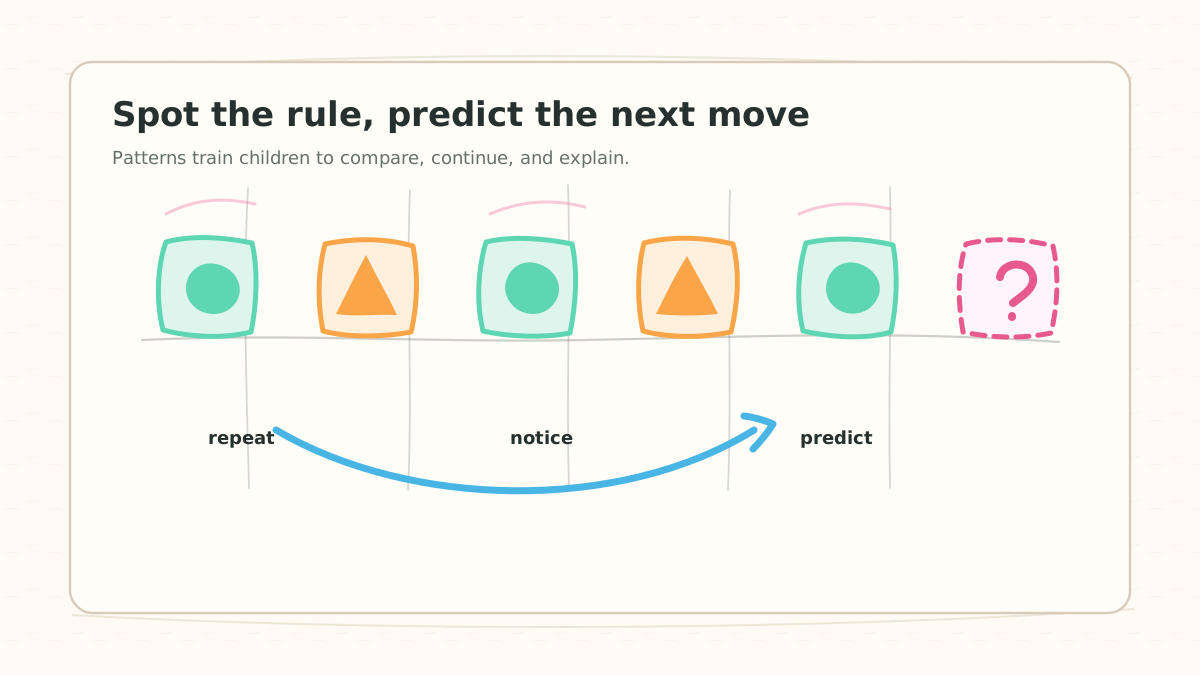
The question “What comes next?” is powerful because it asks a child to move from looking to thinking.
A very young child may answer by copying. That is fine. Later, they begin to explain: “It is blue next because it goes red, blue, red, blue.” That explanation is the beginning of a rule.
Prediction also makes math feel active. The child is not waiting for an adult to tell them the answer. They are testing an idea.
Put out spoon, fork, spoon, fork. Ask, “What should come next?” Then change one feature: big spoon, small spoon, big spoon, small spoon. The math is in noticing which feature matters.
Patterns connect to counting and number sense
Counting itself has patterns. The number words come in order. The next object gets the next count. A number path moves one step at a time.
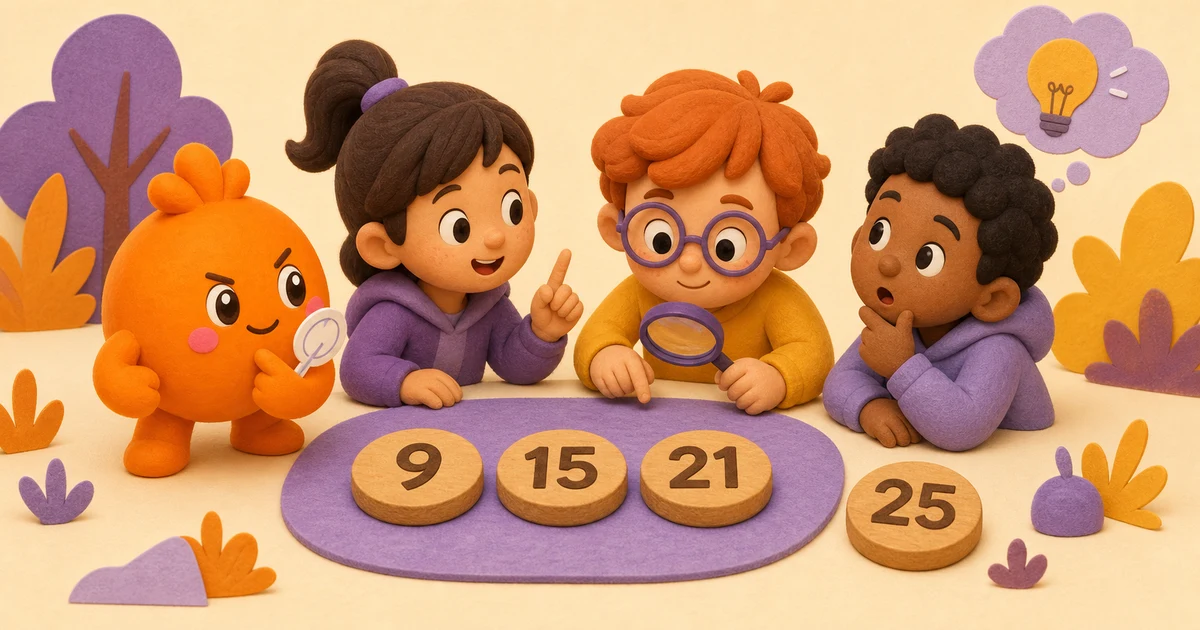
Number patterns make the connection even clearer:
- 1, 2, 3, 4
- 2, 4, 6, 8
- 5, 10, 15, 20
- 10, 9, 8, 7
Children do not need formal algebra to notice that a sequence has a rule. They can see that something is going up, down, alternating, repeating, or growing.
That kind of noticing helps later when arithmetic becomes less about memorizing one answer and more about seeing structure.
Patterns are not only visual
Parents often think of patterns as colors or shapes, but children can practice patterns with almost anything:
- Sound: clap, clap, tap
- Movement: jump, turn, jump, turn
- Objects: block, car, block, car
- Size: tall, short, tall, short
- Time: breakfast, brush teeth, shoes, school
- Number: 3, 6, 9, 12
NAEYC family guidance points out that children meet math through language, play, routines, songs, and everyday objects. That is good news. You do not need a special kit to practice patterns.
You need a short moment and a good question.
The best question is “How do you know?”
“What comes next?” gets the answer.
“How do you know?” gets the reasoning.
That second question matters more than many parents expect. A child who can explain the rule is doing more than matching. They are beginning to communicate mathematical thinking.
Try not to rush the explanation. If the child says, “Because it does,” ask them to point. “Show me the part that helped you know.” Pointing is often the first version of explaining.
How Math & Patterns uses this idea
Math & Patterns is built around short challenges where the child has to spot structure, react, compare, and try again. Some games feel fast. Some feel more visual. The shared idea is the same: math practice becomes easier when the child sees a rule and gets a clear next action.
That is also why pattern games work well as a warm start. A child who resists worksheets may still enjoy solving the next-step puzzle.
A parent routine for this week
Pick one everyday pattern each day:
- Monday: socks
- Tuesday: blocks
- Wednesday: claps
- Thursday: snack pieces
- Friday: number steps
Ask three questions:
- What do you notice?
- What comes next?
- How do you know?
Then stop while it is still easy. Pattern practice does not need to become a lesson to be useful. The goal is to help your child notice structure everywhere, one tiny rule at a time.